What Is Kefir
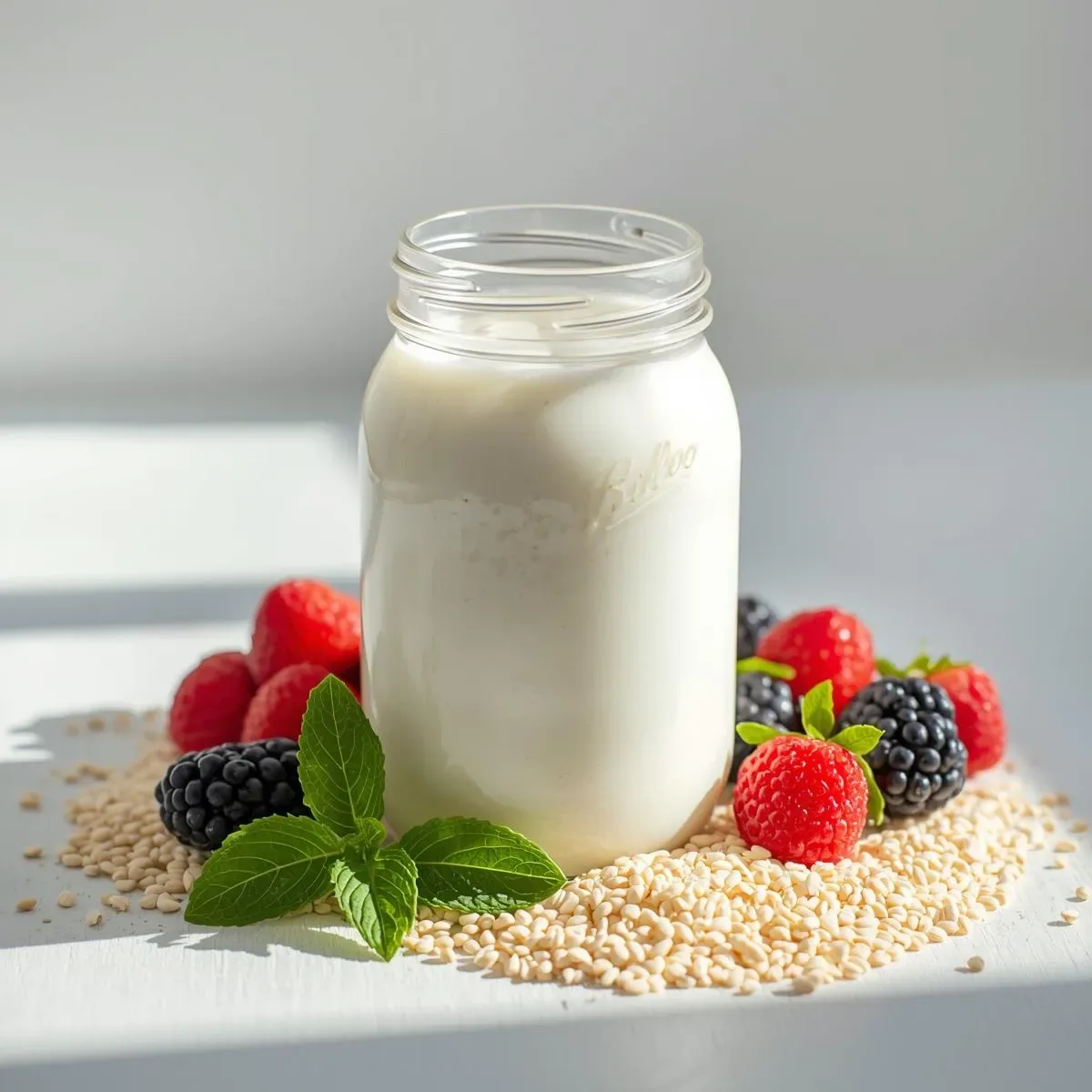
Kefir is a fermented milk drink originating from the Caucasus region, consumed for centuries before microbial science could explain its benefits. The fermentation process uses "kefir grains" — a symbiotic colony of microorganisms encased in a polysaccharide matrix called kefiran.
These grains contain lactic acid bacteria such as Lactobacillus kefiranofaciens, L. acidophilus, L. kefiri, and Bifidobacterium longum, along with yeasts like Saccharomyces cerevisiae. Together they yield more than 30 live microbial strains.
How Kefir Differs from Yogurt
Yogurt typically relies on 2–5 bacterial strains for fermentation, mainly Lactobacillus bulgaricus and Streptococcus thermophilus. The process uses bacteria alone.
Kefir employs both bacteria and yeasts in a co-fermentation, producing a broader probiotic diversity. It has a lower pH (around 4.3) and a slight carbonation from yeast activity — a subtle fizz on the tongue.
Strain diversity matters for the microbiome. The human gut hosts thousands of species; receiving multiple probiotic strains simultaneously may support a wider range of microbial balance than a single strain could.
Benefits Supported by Research
- Gut balance — Lactobacillus and Bifidobacterium are associated with modulating gut microbiota, potentially reducing bloating and irregular digestion.
- Immunity — Over 70% of immune cells reside in the digestive tract. A balanced microbiome is directly linked to immune function.
- Lactose digestion — Fermentation partially breaks down lactose. Many with lactose sensitivity report tolerating kefir better than fresh milk.
- Inflammation — Lactobacillus kefiranofaciens produces kefiran, which preliminary studies (as of 2026) suggest anti-inflammatory properties.
These benefits indicate that kefir may support — not cure or treat — health.
How to Drink Kefir for Maximum Benefit
A daily serving of 150–280 ml is recommended, ideally in the morning or after meals. Beginners should start with 100 ml per day and gradually increase over a week to allow the gut to adjust to the influx of diverse probiotics.
Consistency matters more than volume. Daily intake over several weeks yields better results than occasional large doses. Those with medical conditions or on antibiotics should consult a healthcare professional before adding kefir to their routine.
Rokabo — Live Kefir from Nonthaburi
Rokabo ferments kefir using heritage tibicos grains in Nonthaburi, Thailand. The process involves a 24-hour double fermentation, achieving a pH of 4.32 and 36 live strains. Each milliliter contains approximately 12 billion CFU. A 280 ml bottle has 2.1 g of natural sugar — no sugar is added. Five flavors are available: Original, Sakura, Yuzu, Matcha, and Thai Herb. Price ranges from 320 to 380 THB per bottle, with a 15% discount for weekly subscriptions.