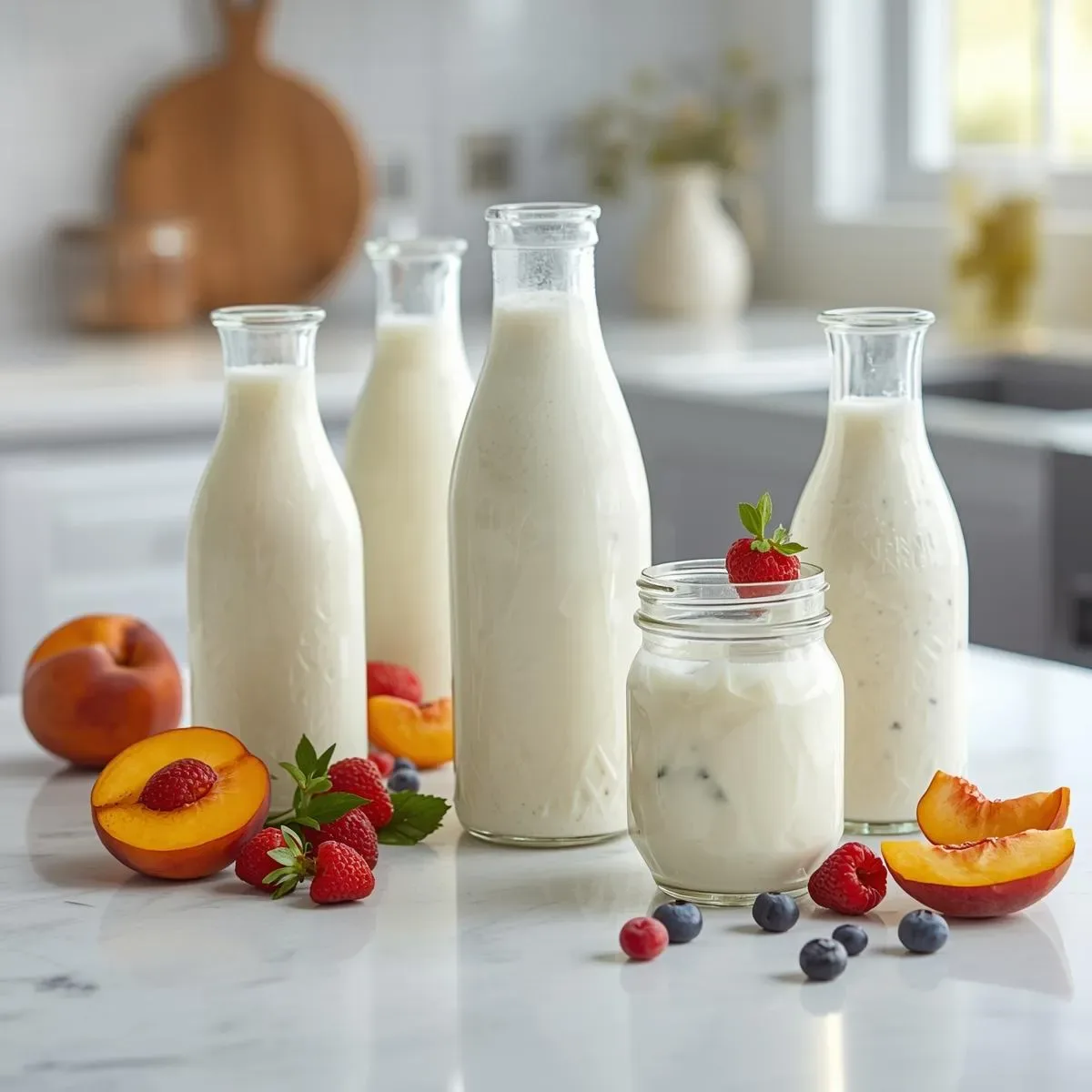
What Is Kefir? A Living Microbial Culture in a Bottle
Kefir is a fermented drink born from heritage tibicos grains and natural sugar, fermented for 24 hours in two controlled cycles. The result is a beverage with a precise pH of 4.32 — an environment that nurtures beneficial microorganisms while discouraging pathogens.
Tibicos grains are not simple granules; they are a complex microbial ecosystem. They harbour strains such as Lactobacillus, Bifidobacterium, Streptococcus, the yeast Saccharomyces, and Kefiranofaciens, which produces natural preservatives. Together, they exist in a symbiotic culture that works in balance.
The double-fermentation process allows the microbes to reach full vitality while reducing sugar to just 2.1 g per bottle, maintaining a consistent volume of 280 ml — the standard for every Rokabo bottle.
Probiotics in Kefir: Unmatched Diversity
Kefir from tibicos grains contains 36 microbial strains — far more than typical probiotic products, which often offer only 1–5 strains. This diversity supports a broader spectrum of gut microbiota, potentially aiding digestive balance more effectively.
The probiotic concentration is ~12 billion CFU/ml, a stable value verified in the lab. It is not a per-bottle total; it is the density per millilitre, consistently maintained across every batch.
Beyond digestion, these microorganisms are associated with supporting the immune system and, through the gut-brain axis, may influence long-term mental health.
When to Drink Kefir for Best Results?
Drinking kefir in the morning, right after waking, may help activate the digestive system and prepare it to absorb nutrients from breakfast. For best effect, consume it 15–30 minutes before a meal.
If you wish to promote regularity, try kefir after dinner or one hour before bed. The live cultures may gently stimulate intestinal movement during the night, helping you feel refreshed in the morning.
Avoid consuming kefir with very hot food or alcohol, as high temperatures and alcohol can compromise microbial stability. Serve at room temperature or chilled to preserve quality.
Rokabo Kefir: Living Culture from Neo-Wabi Bio-Lab
Since 2019, Rokabo has produced kefir in Nonthaburi using a double-fermentation process with precise temperature and humidity control. Every bottle undergoes three quality checks — pH, CFU, and microbial purity.
Five flavours are available: Original, Sakura, Yuzu, Matcha, and Thai Herb. Each bottle is priced at ฿320–฿380. Subscribers receive a 15% discount and weekly delivery.
The packaging reflects the Neo-Wabi Bio-Lab philosophy — Japanese simplicity blended with Thai warmth, and scientific symbols that tell the story of the living culture inside.