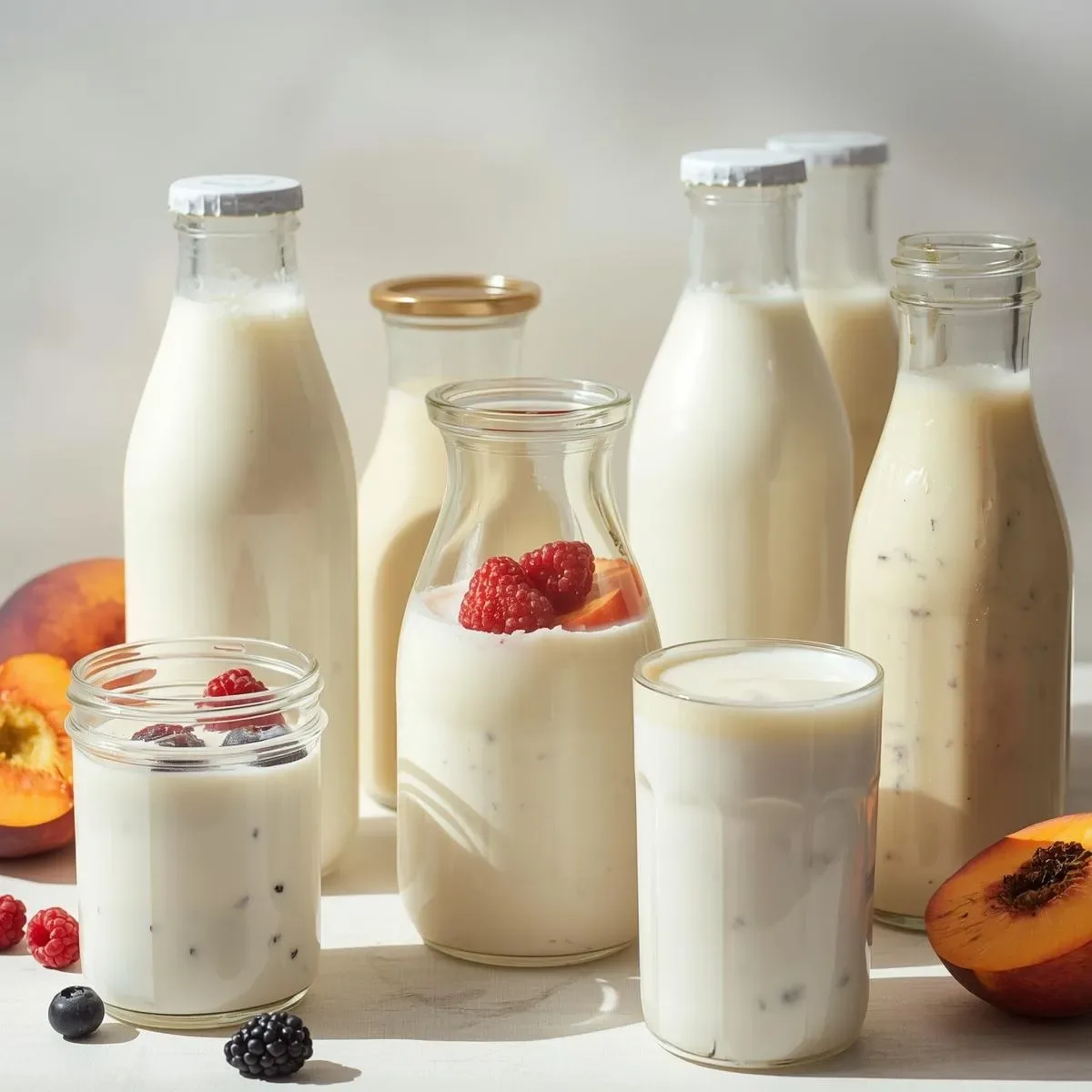
The Living Ecosystem of Kefir
Kefir is not merely a drink; it is a living tradition. It begins with heritage tibicos grains—a symbiotic consortium of lactic acid bacteria, yeasts, and fungi. These grains are not cultivated but passed down, each generation carrying a unique microbial fingerprint. During fermentation, these microbes produce lactic acid, vitamin B12, and antioxidants, transforming milk into a probiotic-rich elixir. The live microorganisms—Lactobacillus, Bifidobacterium, Streptococcus, Saccharomyces, and the rare Lactobacillus kefiranofaciens—are not passive passengers; they actively interact with the gut ecosystem. Laboratory tests confirm that a high-quality ready-to-drink kefir contains approximately 12 billion CFU of living cells per milliliter. This concentration, verified by plate counting and flow cytometry, ensures that each sip delivers a meaningful dose of viable probiotics.
When kefir is pasteurized or stored improperly, these microbes die, and the beverage becomes a sterile, acidic liquid—nutritionally empty. The difference between a dead culture and a living one is the difference between a photograph and a forest. To support gut health, one must seek out kefir that has never been heat-treated and has been handled with care from fermentation to packaging.
Decoding the Label: Numbers That Tell the Truth
A trustworthy kefir label does not hide behind vague terms like "probiotic" or "live cultures." It presents precise, verifiable data. The first figure to check is the CFU count: at least 12 billion CFU per milliliter. This is not an estimate extrapolated from the total volume; it is a direct measurement taken from the final product. The unit "/ml" must be explicitly stated—never "per bottle" or a multiplied number. Multiplying the 12 billion CFU/ml by 280 ml would give a false sense of total counts; the standard is to report concentration.
Next, examine the strain diversity. At least 36 distinct strains should be listed, covering major probiotic genera. Lactobacillus kefiranofaciens is particularly noteworthy—it is a species indigenous to kefir grains and is associated with immune modulation and anti-inflammatory effects in the gut. Other strains like Bifidobacterium longum and Saccharomyces boulardii are well-documented for their roles in digestion and pathogen inhibition. The label should also specify the fermentation time: 24 hours, conducted twice (double fermentation). This two-phase process allows the microbes to reach peak viability and maximal sugar breakdown.
The Science of Double Fermentation
The double fermentation process is a hallmark of artisanal kefir-making. In the first 24-hour cycle, the tibicos grains ferment the milk, converting lactose into lactic acid and other metabolites. The grains are then removed, and the liquid is fermented again for another 24 hours—this time without the grains, allowing the free-living microbes to continue metabolizing residual sugars. The result is a beverage with a sugar content of only 2.1 grams per 280 ml bottle. For context, most fermented milk drinks contain 8–15 grams of sugar per serving. The prolonged fermentation also lowers the pH to 4.32, a level that is safe for the gut and inhibitory to spoilage organisms, yet mild enough to preserve the viability of the beneficial bacteria and yeasts.
Sensory Clues: Taste, Smell, and Texture
A living kefir speaks through its senses. It should be tangy but not sharp, with a clean, slightly yeasty aroma. Any off-flavors—bitterness, sourness beyond a gentle tang, or a chemical taste—indicate over-fermentation, contamination, or pasteurization damage. The texture should be smooth and slightly effervescent, a sign of active carbon dioxide production by the yeasts. A slimy or excessively thick consistency may suggest excessive exopolysaccharide production, while a watery texture could signal insufficient fermentation.
Packaging and the Preservation of Life
The bottle itself is a guardian of the culture. Light and oxygen are enemies of live probiotics. A quality ready-to-drink kefir is packaged in an opaque, airtight container, typically 280 ml—a single-serving size that minimizes exposure after opening. The label must clearly show the production date and expiration date, allowing the consumer to assess freshness. Because live microorganisms gradually decline in number over time, consuming the kefir before the best-before date ensures the highest CFU count.
The Ritual of Daily Consumption
Incorporating kefir into one's daily routine is more than a dietary choice; it is a ritual of sustaining a living culture within oneself. Each morning, a 280 ml bottle provides a concentrated dose of probiotics that may help support digestive balance, immune function, and overall well-being. The mild acidity and low sugar make it a versatile base for smoothies, or simply enjoyed on its own.
Choosing kefir is choosing a living culture. Begin the ritual.
Begin the ritual