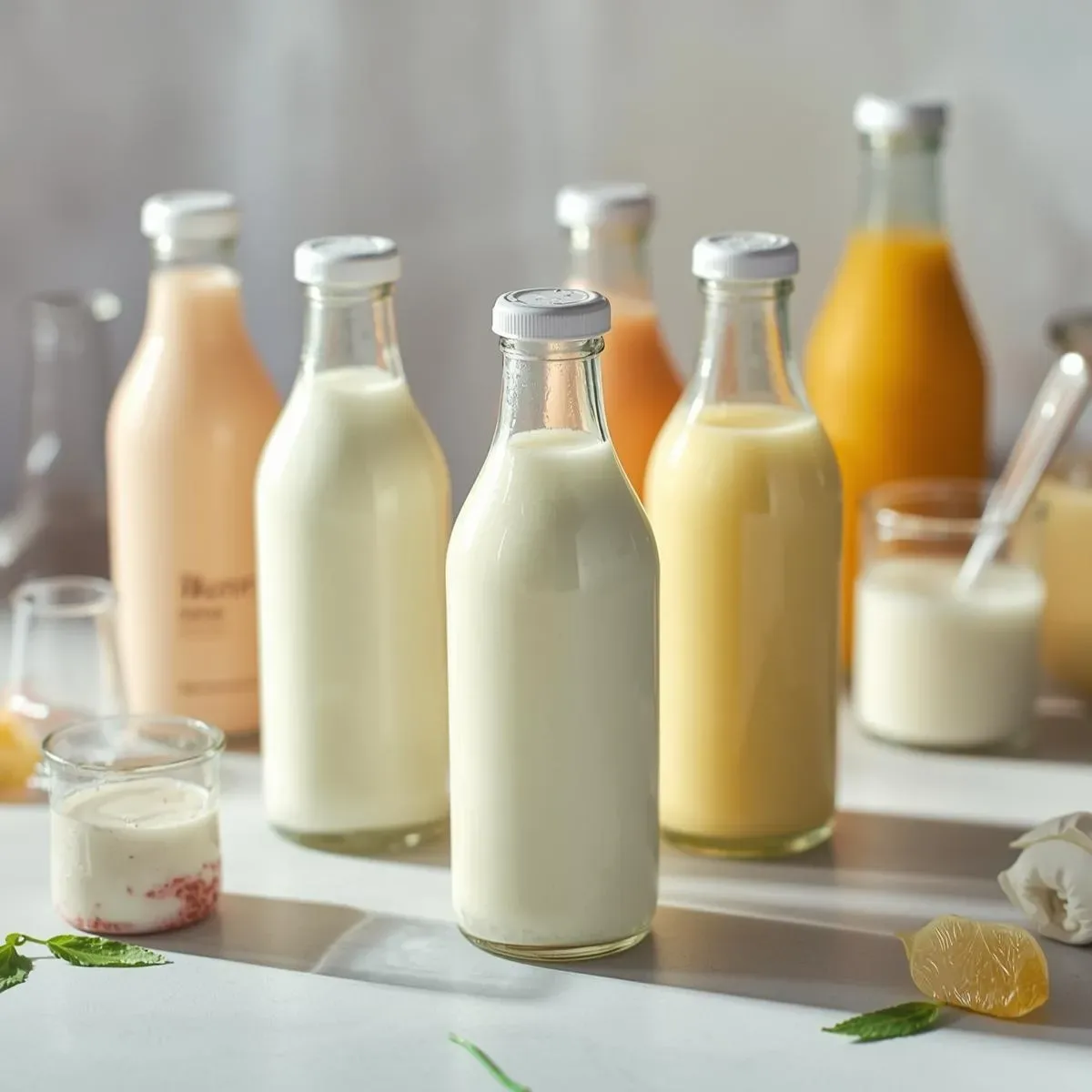
Kefir: A Living Natural Probiotic Source
Kefir is more than just a fermented drink—it is a microbial ecosystem living within heritage tibicos grains, a living culture passed down for centuries, particularly in the Caucasus mountains, the origin of this fermentation tradition. Every bottle of kefir produced in Nonthaburi contains 280 ml and undergoes a 24-hour double fermentation process to allow the microbes to fully proliferate and maintain ecosystem balance.
The microorganisms in kefir are not a single species but include bacteria and yeasts working together symbiotically, creating an environment that supports the growth of beneficial gut microbes. The pH is 4.32—a level optimal for microbial survival in the digestive tract and effective at inhibiting undesirable microorganisms.
Microbial Diversity in Every Bottle
Our kefir contains up to 36 strains of beneficial microbes, covering groups such as Lactobacillus, Bifidobacterium, Streptococcus, and Saccharomyces, each with a specific role in gut health. For example, Lactobacillus kefiri has the potential to inhibit Salmonella and Escherichia coli, while Bifidobacterium bifidum helps reduce chronic intestinal inflammation and supports nutrient absorption.
Additionally, Streptococcus thermophilus aids in lactose digestion, and Saccharomyces kefir—a beneficial yeast—helps break down sugars and reduce gas-related bloating. This diversity cannot be replicated by simply blending a few probiotic strains in supplements; it arises naturally from precisely controlled fermentation.
CFU and True Probiotic Concentration
Our kefir delivers ~12 billion CFU/ml, a value measured by laboratory testing. This CFU figure is not calculated from the 280 ml bottle volume but represents the density of live microorganisms per unit volume, reflecting the true concentration of living microbes in the drink.
Writing CFU as "~12 billion CFU/ml" is the correct scientific standard. It must not be converted or multiplied further (e.g., by 280 ml to obtain a per-bottle value), as that would misrepresent the facts. The only valid expression is per-milliliter.
Safety and Body Compatibility
Sugar content per bottle is 2.1 g—very low compared to typical fermented drinks. Most of the sugar is consumed by microbes during fermentation, leaving only a minimal amount of natural sugar, making it suitable for those managing sugar intake or with insulin resistance.
The flavour range includes Original, Sakura, Yuzu, Matcha, and Thai Herb (extracted from authentic Thai herbs). All variants are produced without pasteurisation to preserve live microbes intact, ideal for those seeking a natural and sustainable approach to gut care.