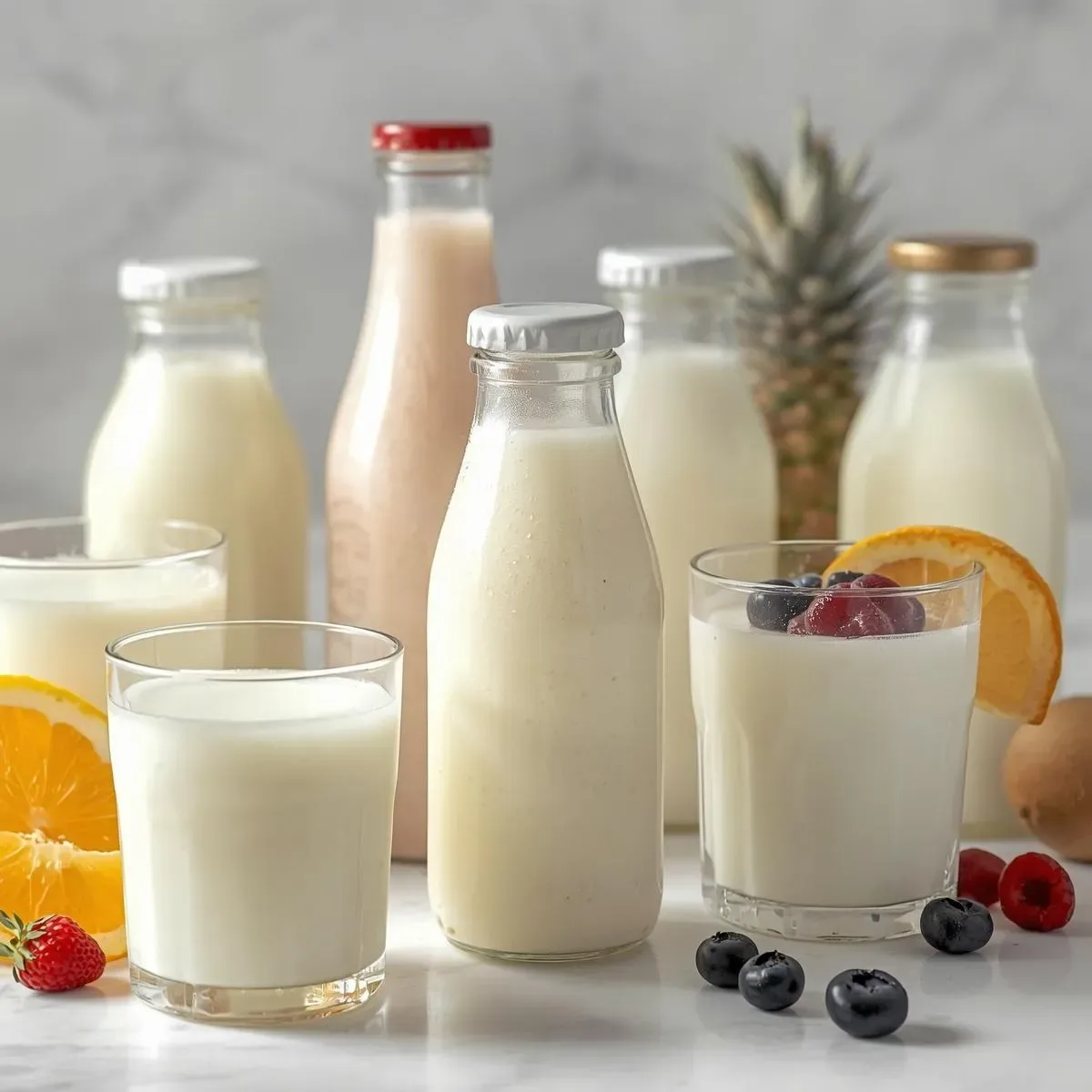
Kefir in the New Era of Healthy Eating
In an age when consumers increasingly value gut health and microbial balance, kefir has emerged as a foundational ingredient in the world of health-oriented cuisine. Its unique combination of live microorganisms, gentle acidity, and creamy texture allows it to serve as a base for both savory and sweet creations — particularly in breakfast bowls, smoothies, and low-sugar desserts that prioritize convenience, minimal added sweeteners, and digestive support.
Kefir produced from heritage tibicos grains undergoes a double fermentation of 24 hours, reaching a pH of 4.32 — an ideal level for preserving the viability of beneficial microbes. Its mild tang stimulates digestion without being overpowering, making it remarkably adaptable to ingredients such as fresh fruits, nuts, seeds, grains, and Thai herbs.
The Microbial Richness of Kefir
At Rokabo, our kefir contains 36 distinct strains of beneficial microorganisms, encompassing both bacteria and yeasts — including Lactobacillus, Bifidobacterium, Streptococcus, Saccharomyces, and Kefiranofaciens. Each strain plays a specific role in supporting digestive function, reducing bloating, modulating the gut microbiota, and may contribute to long-term immune support.
The probiotic concentration stands at approximately 12 billion CFU per milliliter — a clearly stated value that is never recomputed or rescaled. This CFU figure represents a high standard for naturally fermented kefir, especially when compared with pasteurized or formulated alternatives.
Creative Dishes with Kefir
Overnight Oats — Replace milk or yogurt with kefir. Combine rolled oats with kefir, then add fresh fruit, nuts, or chia seeds. Refrigerate overnight. The result is a thick, gently tangy breakfast that provides sustained satiety and a high dose of probiotics from the first meal of the day.
Smoothie Bowls — Use kefir as a base. Blend with banana, avocado, or frozen fruit, then top with granola, coconut flakes, or flax seeds. The texture becomes creamier and richer than when using regular milk, and the flavor profile remains balanced.
Low-Sugar Desserts — Kefir can be transformed into homemade ice cream or whipped cream with minimal added sugar. Simply combine naturally fermented kefir with a small amount of sweetener, then freeze. The result is a delicately sweet-tart treat that retains a high level of active probiotics.
Kefir as a Daily Health Ritual
Incorporating kefir into household cooking is more than a dietary choice — it is part of a sustained culture of self-care. The kefir produced in Nonthaburi through a double-fermentation process reflects attention to detail: the quality of the grains, the fermentation duration, and the control of environmental conditions.
With only 2.1 grams of sugar per bottle, kefir provides appropriate energy without significantly affecting blood glucose levels, especially when compared with typical sweetened beverages. This makes it suitable for those managing weight or insulin sensitivity.