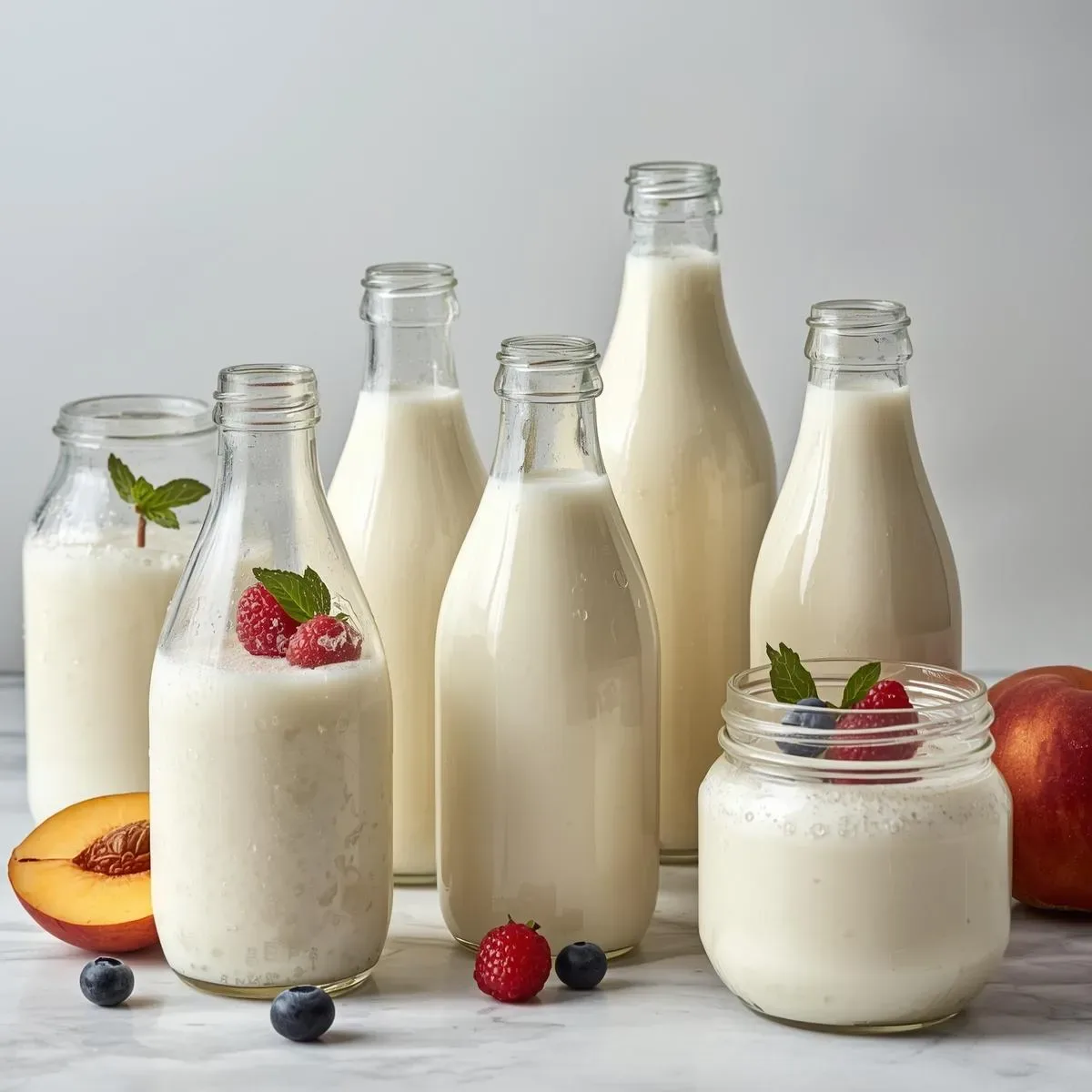
What Is Kefir and Why It Suits Homemade Drinks
Kefir is a fermented beverage born from heritage tibicos grains, undergoing a 24-hour double fermentation. The result is a liquid with a pH of 4.32, carrying ~12 billion CFU/ml of probiotics from 36 strains—including Lactobacillus, Bifidobacterium, Streptococcus, and Saccharomyces—that support gut microbiota balance.
Its clean, mildly sour taste and gentle effervescence not only refresh but also act as a flavour bridge. When paired with sweet fruits like mango or banana, the acidity cuts through cloying sweetness, creating a harmonious drink.
The texture falls between liquid and cream, making it ideal for silky smoothies without added thickeners or excessive ice. Its density also allows stable layers in layered drinks, preventing unwanted mixing.
Benefits of Kefir in Homemade Drink Recipes
Using kefir as a base elevates nutritional value. Each 280 ml bottle provides ~12 billion CFU/ml of probiotics that may support digestive function and long-term immune resilience.
With only 2.1 g of sugar per bottle, it suits those managing sugar intake. Even when blended with naturally sweet fruits, the total remains health-conscious.
Kefir can replace yogurt or fresh milk in many recipes—especially iced lattes or smoothie bowls—adding depth of flavour and microbial richness to every glass.
Ideas for Application in Homemade Drinks
Kefir smoothie with fresh fruit: mango, banana, and mint create a satiating drink with probiotics in every sip. The light sourness balances fruit sweetness perfectly.
Japanese-inspired kefir drinks: Sakura or matcha kefir mixed with warm water or soda yields an aromatic, complex beverage with unique freshness.
Thai herb blends: Pandan, ginger, or lemongrass blended with kefir produce naturally fragrant drinks that may aid digestion.
Adjusting Flavour While Preserving Nutrition
To reduce tartness, mix with fresh fruit juice or a touch of honey, but keep added sugar below 2.1 g per bottle to maintain the low-sugar profile.
For thicker drinks, blend thoroughly with minimal ice, or use well-fermented tibicos grains for consistent texture.
Always refrigerate after opening to preserve microbial vitality and prevent over-fermentation, which could alter the taste.