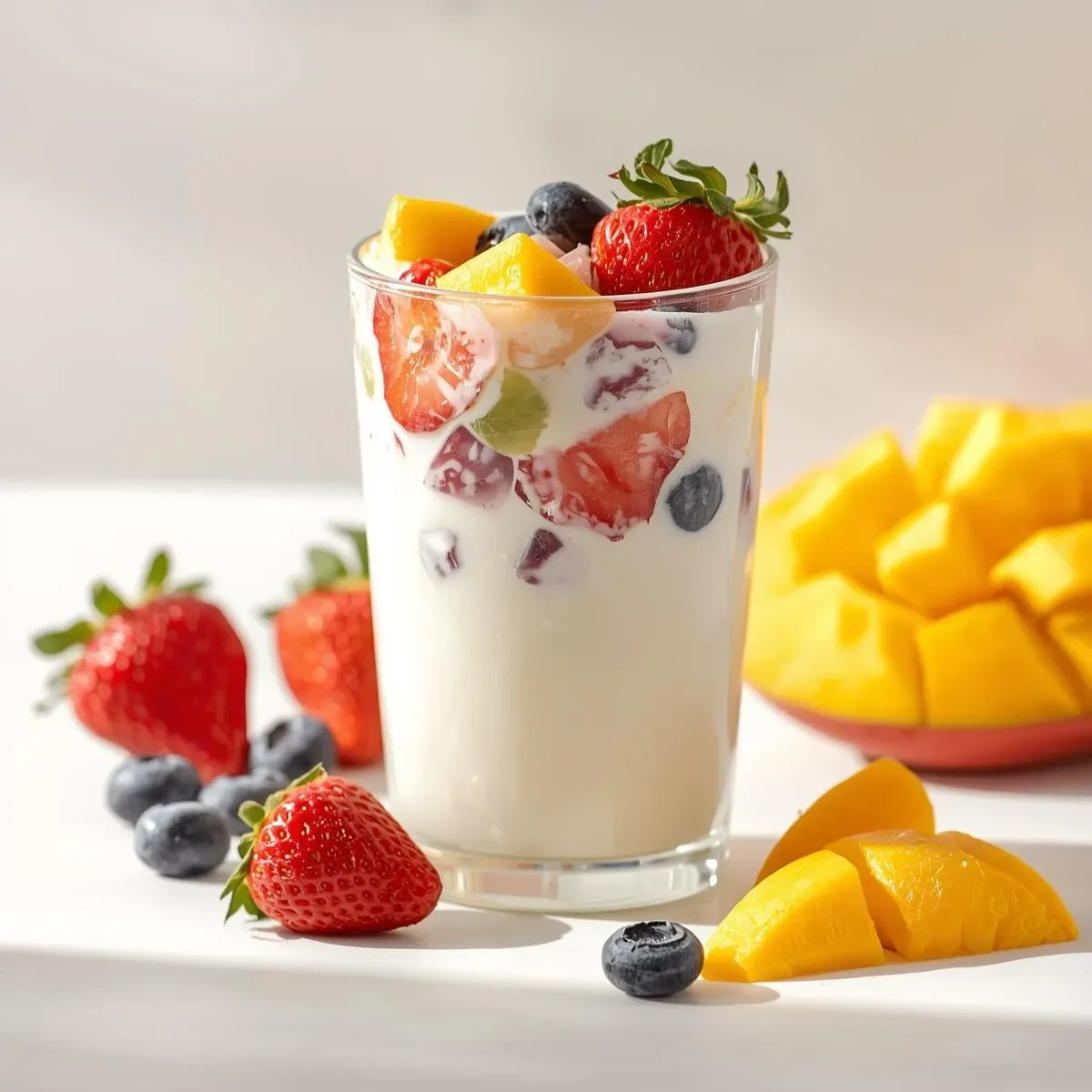
Why Mix Kefir with Fruit?
Kefir’s natural acidity—a result of lactic acid produced during fermentation—can be an acquired taste. Fresh fruit, with its inherent sweetness, vitamins, and fibre, balances that tang while offering nutritional synergy. Together they create a drink that is both palatable and probiotic-rich.
The key rule: temperature. Live microbes in kefir begin to decline when exposed to heat above 40°C. So always use fruit at room temperature or chilled. Avoid long blending sessions; a quick 10–15 second pulse is sufficient. This ensures that the beneficial bacteria and yeasts—Lactobacillus, Bifidobacterium, Streptococcus, Saccharomyces, and Kefiranofaciens among others—remain viable.
Seven Kefir-Fruit Drink Recipes
1. Strawberry Kefir
Blend 180 ml kefir with 5–6 fresh strawberries for 10–15 seconds. Rich in vitamin C, this vibrant pink drink is perfect for a morning boost. The natural sugars of the berry complement the tang without overwhelming the microbes.
2. Thai Mango Kefir
½ cup ripe Thai mango (diced) + 150 ml kefir + a few ice cubes. Blend until smooth. Thai mango provides beta-carotene, supporting immune health. The sweet-tart balance is especially refreshing in Bangkok's climate.
3. Banana Oat Kefir
1 ripe banana + 180 ml kefir + 2 tablespoons rolled oats. Blend. Oats are a prebiotic—they feed the beneficial microbes already in kefir, potentially enhancing gut health. A filling breakfast option.
4. Kiwi Green Apple Kefir
1 kiwi + ½ green apple + 150 ml kefir. Blend coarsely for a fibre-rich drink. Both fruits are high in fibre, which supports regular digestion and acts as a prebiotic.
5. Mixed Berry Kefir
⅓ cup blueberries and raspberries + 180 ml kefir. Stir gently—no blending needed. Berries contain anthocyanins, antioxidants associated with reduced inflammation. This recipe preserves the fruit's texture.
6. Peach Mint Kefir
1 fresh peach (diced) + 3–4 fresh mint leaves + 160 ml kefir. Chill for 10 minutes before drinking. Mint adds a cooling effect, ideal for hot afternoons. The delicate peach flavour does not overpower the kefir.
7. Papaya Ginger Kefir
¼ ripe papaya + a pinch of grated young ginger + 150 ml kefir. Blend. Papaya contains papain, an enzyme that aids protein digestion; ginger is traditionally used to soothe stomach discomfort. A digestive-friendly choice.
Principles for Maximum Benefit
- Choose fresh or frozen fruit over packaged juices—juices often contain added sugars that can disrupt microbial balance.
- Blend quickly and briefly to avoid heat buildup. A short pulse is enough.
- Drink immediately after preparation to consume the highest number of live microbes.
- Maintain a ratio of 60–70% kefir to 30–40% fruit for optimal texture and probiotic concentration.
Choosing Your Base Kefir
Milk kefir works well for recipes 1–4 and 6–7, as milk proteins create a creamy consistency. Recipe 5 (mixed berry) is equally good with water kefir. For those avoiding lactose, water kefir can replace milk kefir in any recipe.
Rokabo Original Kefir, with pH 4.32 and 36 live strains at ~12 billion CFU/ml, retains its microbial integrity when mixed with chilled fruit. It serves as an excellent base for all seven recipes.